Loch Ness Monster may be a giant eel, say scientists
 GETTY IMAGES
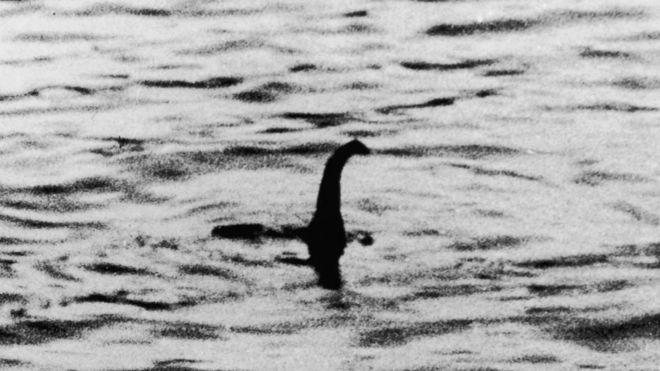
The creatures behind repeated sightings of the fabled Loch Ness Monster may be giant eels, according to scientists.
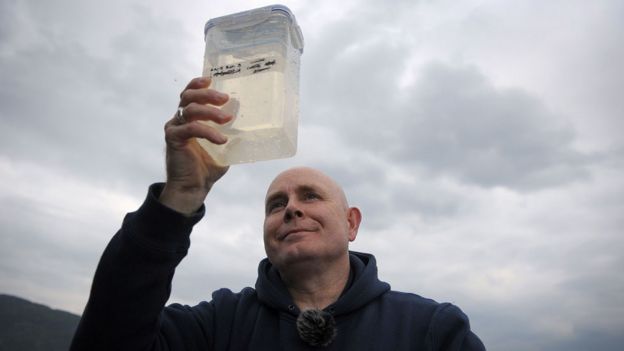
Researchers from New Zealand have tried to catalogue all living species in the loch by extracting DNA from water samples.
Following analysis, the scientists have ruled out the presence of large animals said to be behind reports of a monster.
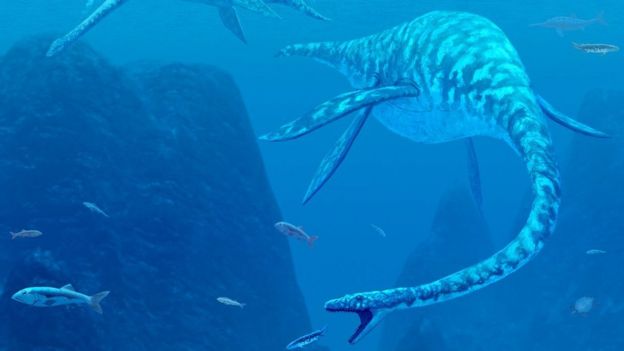
No evidence of a prehistoric marine reptile called a plesiosaur or a large fish such as a sturgeon were found.
Catfish and suggestions that a wandering Greenland shark were behind the sightings were also discounted.
 SCIENCE PHOTO LIBRARY
 UNIVERSITY OF OTAGO
The aim of the research was not to find Nessie, but to improve knowledge of what plants and animals live in Loch Ness.
- One plausible theory for Nessie, say scientists
- Warning over 'Storm Loch Ness' monster hunt
- What happens if Nessie is found?
- Monster of a loch
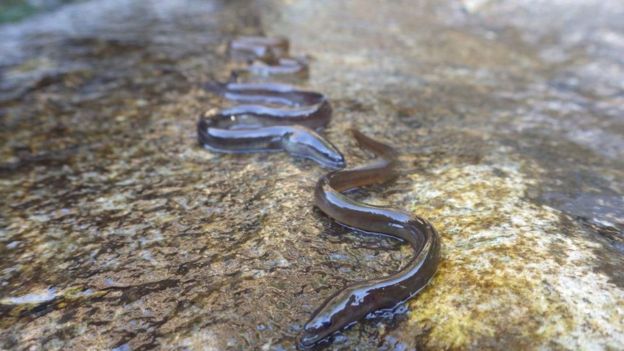
European eels are among the creatures in the loch, and whose DNA was picked up by the new research.
Juvenile eels, known as elvers, arrive in Scottish rivers and lochs after migrating more than 3,100 miles (5,000 km) from the Sargasso Sea near the Bahamas, where the animals spawn and lay eggs.
 NESS DISTRICT SALMON FISHERY BOARD
Prof Neil Gemmell, a geneticist from New Zealand's University of Otago. said: "People love a mystery, we've used science to add another chapter to Loch Ness' mystique.
"We can't find any evidence of a creature that's remotely related to that in our environmental-DNA sequence data. So, sorry, I don't think the plesiosaur idea holds up based on the data that we have obtained."
He added: "So there's no shark DNA in Loch Ness based on our sampling. There is also no catfish DNA in Loch Ness based on our sampling. We can't find any evidence of sturgeon either,
"There is a very significant amount of eel DNA. Eels are very plentiful in Loch Ness, with eel DNA found at pretty much every location sampled - there are a lot of them. So - are they giant eels?
"Well, our data doesn't reveal their size, but the sheer quantity of the material says that we can't discount the possibility that there may be giant eels in Loch Ness. Therefore we can't discount the possibility that what people see and believe is the Loch Ness Monster might be a giant eel."
DNA from humans, dogs, sheep, cattle, deer, badgers, rabbits, voles and birds were also identified by the researchers.

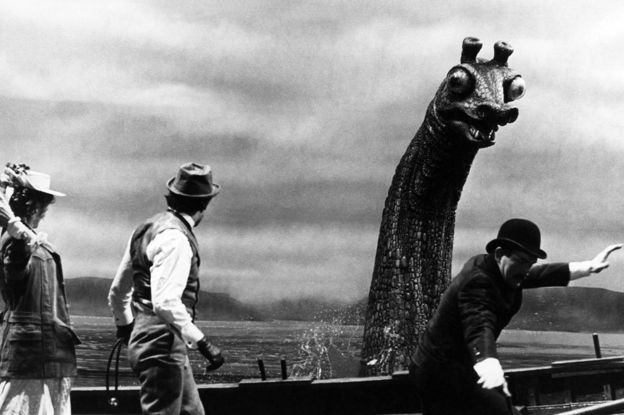
How Nessie came to grip the public imagination
 AF ARCHIVE/ALAMY
The Loch Ness Monster is one of Scotland's oldest and most enduring myths. It inspires books, TV shows and films, and sustains a major tourism industry around its home.
The story of the monster can be traced back 1,500 years when Irish missionary St Columba is said to have encountered a beast in the River Ness in 565AD.
Later, in the 1930s, The Inverness Courier reported the first modern sighting of Nessie.
In 1933, the newspaper's Fort Augustus correspondent, Alec Campbell, reported a sighting by Aldie Mackay of what she believed to be Nessie.
Mr Campbell's report described a whale-like creature and the loch's water "cascading and churning".
The editor at the time, Evan Barron, suggested the beast be described as a "monster", kick starting the modern myth of the Loch Ness Monster.

In 1934, highly respected British surgeon, Colonel Robert Wilson, claimed he took a photograph of the monster while driving along the northern shore of Loch Ness.


Sem comentários:
Enviar um comentário